


Interview with Leif Sigersen
Always guided by instinct rather than trends
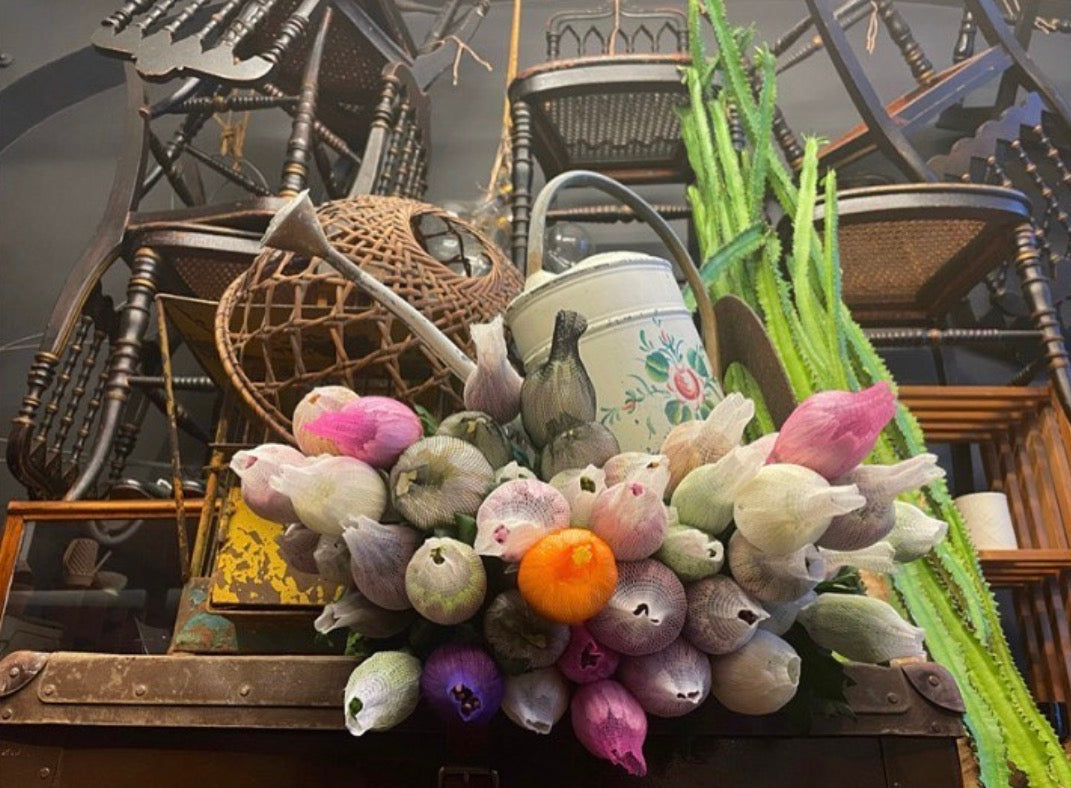
Rooted in a lifelong love of nature, old-world romance and an almost fairytale-like sensibility, Leif Sigersen’s work carries a distinct and unmistakable aesthetic. For more than three decades, Leif has moved effortlessly between botany, set design, styling and ceramics, guided by instinct rather than trend. In this conversation, we step into a world that is shaped by flowers, form and beauty as we talk creativity, devotion and childhood dreams with the Copenhagen-based artist.
There is a very distinct aesthetic and storytelling at play in your work. How would you describe the visual and sensory identity of your creative universe?
“I do think I have a certain style, and naturally it permeates everything I do. But when I get an assignment, it isn’t really about me. It’s a collaboration between the client and me, about supporting and underlining a certain sentiment, universe, space or occasion. Having done this for so many years, I think people also come to me because they are familiar with my aesthetic language. They expect something that feels like ‘me’, which luckily means that most of the people I work with are happy with what they get. The flip side is that when someone doesn’t like what I do, I take it quite personally, because it often feels like an extension of myself.
I’ve always felt I was born in the wrong century. In a way, my work tells a story of something from another time, something slightly old-fashioned. I don’t like things that look too new, too plastic or too neon. That is why I often mix fresh flowers with a branch or something crooked or slightly faded that I’ve picked myself. I’m not concerned with what’s trendy or modern, but I hope to keep renewing myself within a framework that is distinctly my own.”
What originally sparked your passion for nature and flowers, and did you always know you wanted to work with botany?
“When I was a child and people asked what I wanted to be when I grew up, I always said a gardener or a priest. I’m not from a creative or religious family, but I was full of imagination and drawn to the calm, solemn atmosphere of a church or a garden.
It was always important to me to have plants in my room. Even at eight years old, I would get up early, take the bus to the flower market before school and spend my allowance on plants. Afterwards, I’d bring my plants with me on the bus back and head straight to class. The grown-ups allowed it, even though I now realise it was quite unorthodox. I always knew I was different in that way, but I never experienced it as a problem.”
Throughout the past 35 years, your love of nature, design, craftsmanship and art has taken you through several disciplines and expressions. How did you first get into botany and styling?
“After 10th grade, I interned at a large industrial market garden, and after three months I quit. It completely shocked and discouraged me, and I gave up on the idea of working with gardening. I went back to school for another five years, thinking I might become an architect.
Then one night, walking past Kongens Nytorv, I saw a small window radiating the most magical light. It was Tage Andersen’s studio. I didn’t know him at the time, but I immediately sensed that this was what I was meant to do. It felt like an epiphany. I wrote him a handwritten application, delivered it in person on a Thursday, and started the following Tuesday as Tage’s first-ever apprentice. For two years, it was my entire life. I worked non-stop, and afterwards assisted a fashion stylist for a year before finally opening my own space.”
Which moments in your career have had the greatest influence on where you are today?
“Meeting Tage was defining for both me and the direction of my career. But living in New York in my late thirties, where I opened a shop with Helena (Christensen, ed.), was also very special. I would never have moved there if it weren’t for her, but I’m so glad I did, and that I did it at that point of time in my life. Closing the shop and moving back home wasn’t easy, but I wanted a different life, and I’ve never regretted that decision.”
Where do you typically find inspiration, and how does that translate into your creative process?
“The chance of getting inspired on a Monday night in the grocery store while buying potatoes isn’t the greatest, but beyond that, inspiration doesn’t come to me on demand. I’ve never experienced it that way. It may also be because I’m not particularly concerned with what’s modern. What I create is always an extension of something I’ve already done. Without sounding too self-important, I believe inspiration comes from within. Sometimes it takes longer to reach the final result, but I trust that I always will.”
Are there any techniques or methods fundamental to your creative process, regardless of material or form?
“I have a friend who is a goldsmith, and she sits down and sketches before crafting her pieces. I’ve never worked like that. Usually, I don’t even know in advance what I want to create. It evolves as I work, drawing on the many impressions stored in the back of my mind. Often it begins with something already existing - a shape, colour, texture or small detail that feels compelling.
Whether I do flowers, set design, styling, or ceramics, it’s all a matter of expression - creating a sentiment and universe, conveying a story, and working with composition, colour and scenography. To me, it’s not that different whether I do one or the other. After 35 years, I still feel that whatever I create, I can do better next time. It’s exhausting, but it’s also a strong drive that keeps me going and evolving.”
What does a typical workday look like for you?
“Twice a week my day begins at 3.30 in the morning. I usually move quickly, but in the morning I insist on slowing down. I shower, have breakfast and coffee in peace, and go over my shopping list before heading to the market. Luckily, I’ve always been a morning person and I love the calm of those early hours and the feeling of being the first one awake.
After the market, I return to my workshop to unload and prepare everything, then ride my bike around the city to clients where I often install on location. Because I have to get up so early, my day usually ends around 8 or 8.30. It’s a quite different life from most people I know, but fortunately, after 30 years like this, my friends understand that big Saturday nights out are rarely my thing.”
What do you think would surprise people most about your work?
“I think people would be surprised by how stressful it actually is. Many imagine it to be romantic and peaceful, but it’s anything but. I’m not complaining, I truly love my job, but there is much more to it than most people think.”
Clearly, work and leisure blend naturally for you. When you take time off, where do you enjoy spending it most?
“I love going to flea markets, and if I could, I’d visit Frederiksberg flea market every Saturday. Again, it’s the attraction of old things and I’m drawn to the feeling of treasure hunting, never knowing what you might find.
I was born and raised in Copenhagen, and am a Copenhagener by heart. As a child, I even said I wanted a small cottage, but it had to be placed at Rådhuspladsen. My boyfriend is from Ærø, though, and I love going there with him. I could never live there, three days is enough, but taking the ferry knowing you can’t just leave an hour later is very special. It feels old-fashioned and still in a way.
A few years ago, we bought a small cottage by Roskilde Fjord. Only 45 minutes from Copenhagen, yet completely quiet. You never run into anyone you know. It’s wonderful.”
Other periodicals
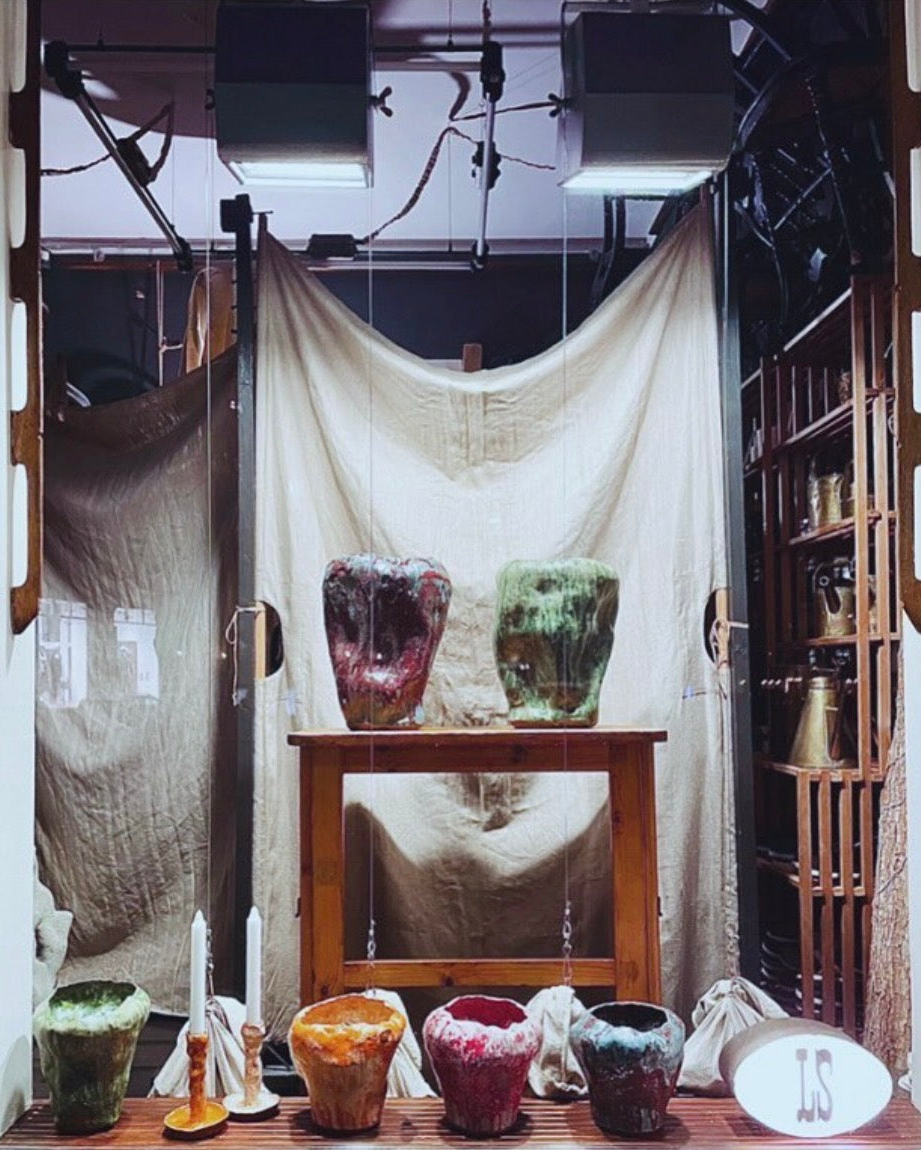
Interview with Leif Sigersen: Always guided by instinct rather than trends
Leif truly is a special soul and a constant source of inspiration to us at tété. In this conversation, we step into his world, one shaped by flowers, form and beauty, as we talk with the Copenhagen...
Read more
Interview with Signe Rødbro: The name and designer behind by Signe
In the mythical Aegean region of Turkey, surrounded by the sea and organic cotton fields, By Signe’s timeless designs are brought to life - each piece crafted with care, quality and intention.
Read more